If you’ve ever tried to start a small business in Nigeria, one thing becomes clear very quickly—making money is not just about having capital, it’s about choosing the right product. You can invest your last money into goods and still struggle to sell, while someone else with less money is making sales every single day. The difference is simple: they are selling fast moving products.
In Nigeria, especially in open markets and street-side businesses, daily income depends heavily on how fast your goods can leave your hands and turn back into cash. Many beginners make the mistake of going for random products just because they look attractive or profitable on the surface, without considering demand. That’s why some people get discouraged early, thinking business is not for them. In reality, they just started with the wrong items.
Fast moving products are goods that people need regularly, almost every day. These are items that don’t stay long in your shop because customers are constantly buying them. When you focus on these kinds of products, you reduce the risk of losses and increase your chances of making steady daily income. This is exactly what you need as a beginner—something that brings in cash flow consistently, even if the profit per sale is small.
One of the biggest advantages of selling fast moving products in Nigeria is that you don’t necessarily need a shop before you start. Many successful traders today began with something as simple as a small table, a tray, or even moving around with their goods. What matters most is positioning yourself where demand already exists and offering something people cannot easily ignore.
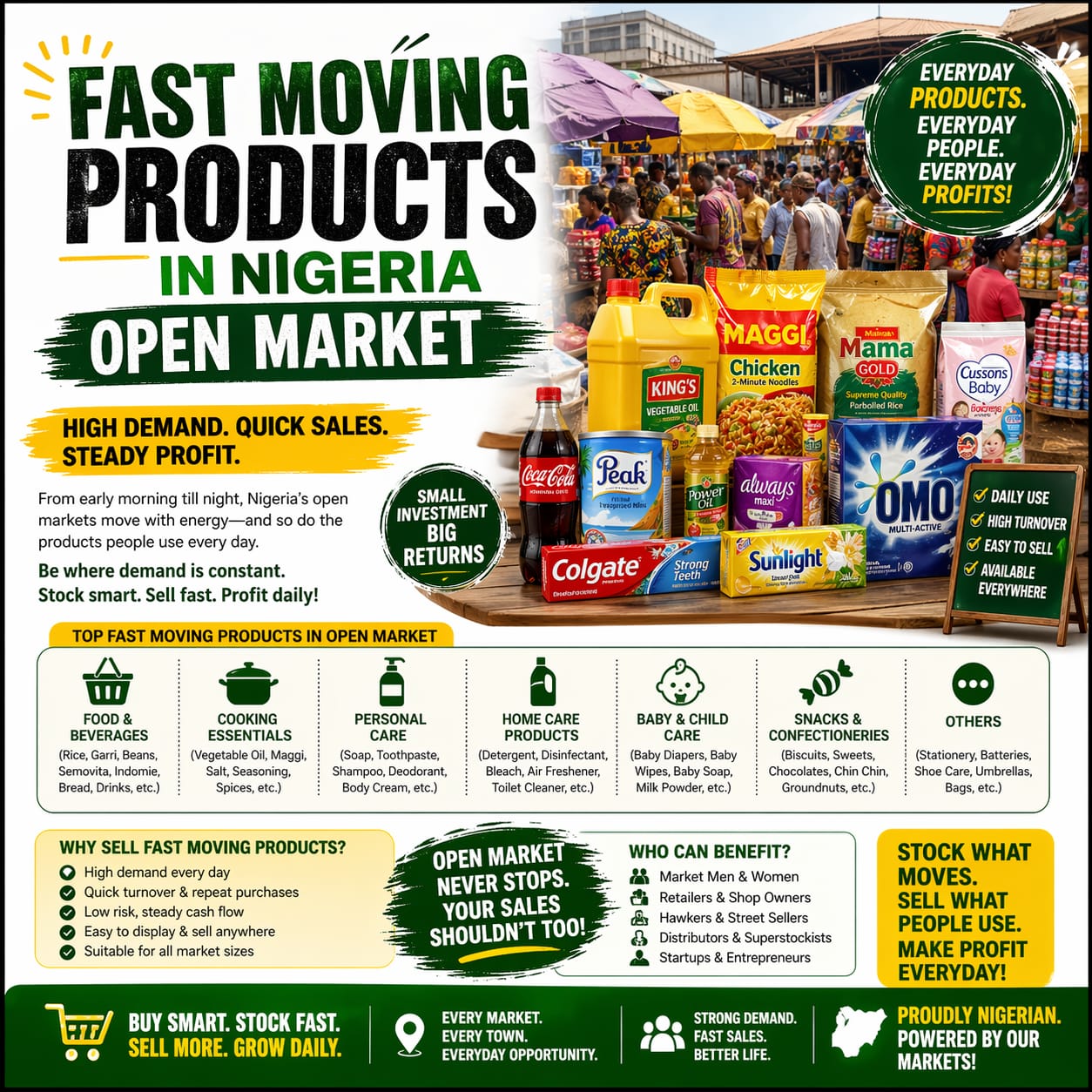
Food items remain the number one category when it comes to fast selling products. No matter the condition of the economy, people must eat. This makes food one of the safest business areas for beginners. Items like garri, rice, beans, noodles, and yam are always in demand because they are part of everyday meals. Even when people don’t have much money, they still find a way to buy food in small quantities. That’s why selling in smaller portions is a powerful strategy. It allows you to attract more customers, especially those who prefer to buy based on their daily income.
Another product category that performs extremely well is sachet water and soft drinks. Nigeria’s hot weather alone guarantees demand for cold drinks and water. You’ll notice that people don’t plan to buy water most times—it’s often an impulse decision driven by thirst. This is why location plays a big role here. Selling near bus stops, markets, schools, or traffic areas can significantly increase your sales. While the profit per unit might look small, the volume of sales you can make in a day can add up to something meaningful.
Snacks are also a strong option if you’re looking for something that sells quickly. Items like puff-puff, meat pie, buns, and packaged snacks are always moving, especially in busy environments. People are constantly looking for something quick to eat while on the move, and snacks provide that convenience. This business works even better if you position yourself around places with heavy foot traffic such as schools, offices, or roadside junctions. What makes snacks attractive is that you can start with very little capital and still scale gradually as your customer base grows.
Phone accessories have also become one of the fastest selling items in Nigeria today. Almost everyone owns a mobile phone, and these devices require constant maintenance in the form of chargers, earphones, power banks, and protective cases. These items get damaged easily or misplaced, which creates repeat demand. Unlike food items, phone accessories can give you higher profit margins, especially if you buy in bulk at cheaper rates. This makes it a smart option for those who want to combine fast sales with better profit per item.
Provision store items are another reliable category that never goes out of demand. Everyday items like sugar, salt, seasoning cubes, milk, and bread are essentials in most households. What makes this category powerful is that customers often buy in small quantities, sometimes even on a daily basis. This gives you the opportunity to serve a wide range of people, especially in residential areas. Starting small with just a few essential items can gradually grow into a full provision shop if managed properly.
Fruits also fall under fast moving products, although they require careful handling. Items like bananas, oranges, and pineapples are popular because they are affordable and easy to consume. However, the challenge with fruits is that they are perishable. If you don’t sell them quickly, they can spoil and lead to losses. This means you need to understand your market well and stock according to demand. When done right, fruit selling can generate steady daily income, especially in hot weather when people are more likely to buy something refreshing.
One business model that has gained massive popularity in Nigeria is the POS (Point of Sale) business. Even though it’s not a physical product, it provides a service that is in constant demand. With the challenges people face in accessing cash from banks and ATMs, POS operators have become essential in many communities. The ability to offer quick withdrawals, transfers, and other services makes this business highly profitable when placed in a good location. Many operators earn daily income that is consistent and reliable, especially in busy areas.
Another interesting area is thrift clothing, commonly known as okrika. This business thrives because it offers affordability and variety. Many Nigerians prefer buying second-hand clothes because they can get quality items at lower prices. The key to success here is selecting good pieces that still look attractive and presentable. When customers see value, they are more likely to buy, and even come back for more. This creates a cycle of repeat customers, which is important for long-term growth.
Cosmetics and personal care products are also fast moving, particularly among women. Items like creams, soaps, perfumes, and hair products are used regularly and need to be replaced often. This creates a consistent demand that you can tap into. If you understand your target market and stock products that match their preferences, this business can grow quickly. It also allows you to build relationships with customers who will rely on you for their regular needs.
Recharge cards and data services remain relevant despite the growth of digital banking. People still need airtime and data daily for communication and internet access. Selling recharge cards can be combined with other businesses like POS or phone accessories to increase your income streams. The more needs you can meet in one location, the more customers you will attract.
While all these opportunities exist, it’s important to understand that success in the market is not automatic. Many beginners fail because they ignore simple but critical factors. One of the biggest mistakes is choosing products based on assumptions instead of observing real demand. Just because something looks profitable doesn’t mean it will sell in your area. Another common mistake is overstocking. Buying too much at once can tie down your money and increase the risk of losses, especially if the product doesn’t move as expected.
Your attitude towards customers also plays a huge role in your success. In a competitive environment like the Nigerian market, people have many options. If your customer service is poor, they will simply go elsewhere. Being polite, patient, and approachable can make a big difference in building trust and attracting repeat customers. Over time, these relationships become one of your strongest assets.
Location is another factor you cannot ignore. Even the best product can fail in the wrong location. Before you start, take time to observe your environment. Look at what people are buying, where they are buying it from, and how often those transactions happen. This kind of simple research can save you from costly mistakes and help you position yourself for success.
If your goal is to make daily income, you need to focus on turnover rather than just profit per item. Selling ten items with small profit can be more effective than selling one item with high profit. The idea is to keep money flowing in and out of your business consistently. This allows you to reinvest, grow your stock, and gradually increase your earnings.
One practical strategy that works well is combining multiple fast moving products. Instead of relying on one source of income, you can sell related items together. For example, combining snacks with drinks or adding POS services to your setup can increase your daily earnings significantly. This approach reduces risk and maximizes your chances of making consistent sales.
As your business grows, you can start thinking about scaling. This might involve increasing your stock, expanding your product range, or moving to a better location. Growth should be gradual and based on your actual performance, not assumptions. The goal is to build something sustainable that can continue to generate income over time.
At the end of the day, making money in Nigerian markets is very possible, even as a beginner. What matters most is starting with the right information and taking action. You don’t need to wait until everything is perfect. Start small, learn as you go, and improve with experience. The market rewards those who are consistent, observant, and willing to adapt.
If you’ve been thinking about starting a business but didn’t know where to begin, this is your sign to take that first step. Choose one fast moving product, test it in your area, and focus on serving your customers well. With time, effort, and smart decisions, you can build a steady source of daily income and gradually move towards financial stability.