
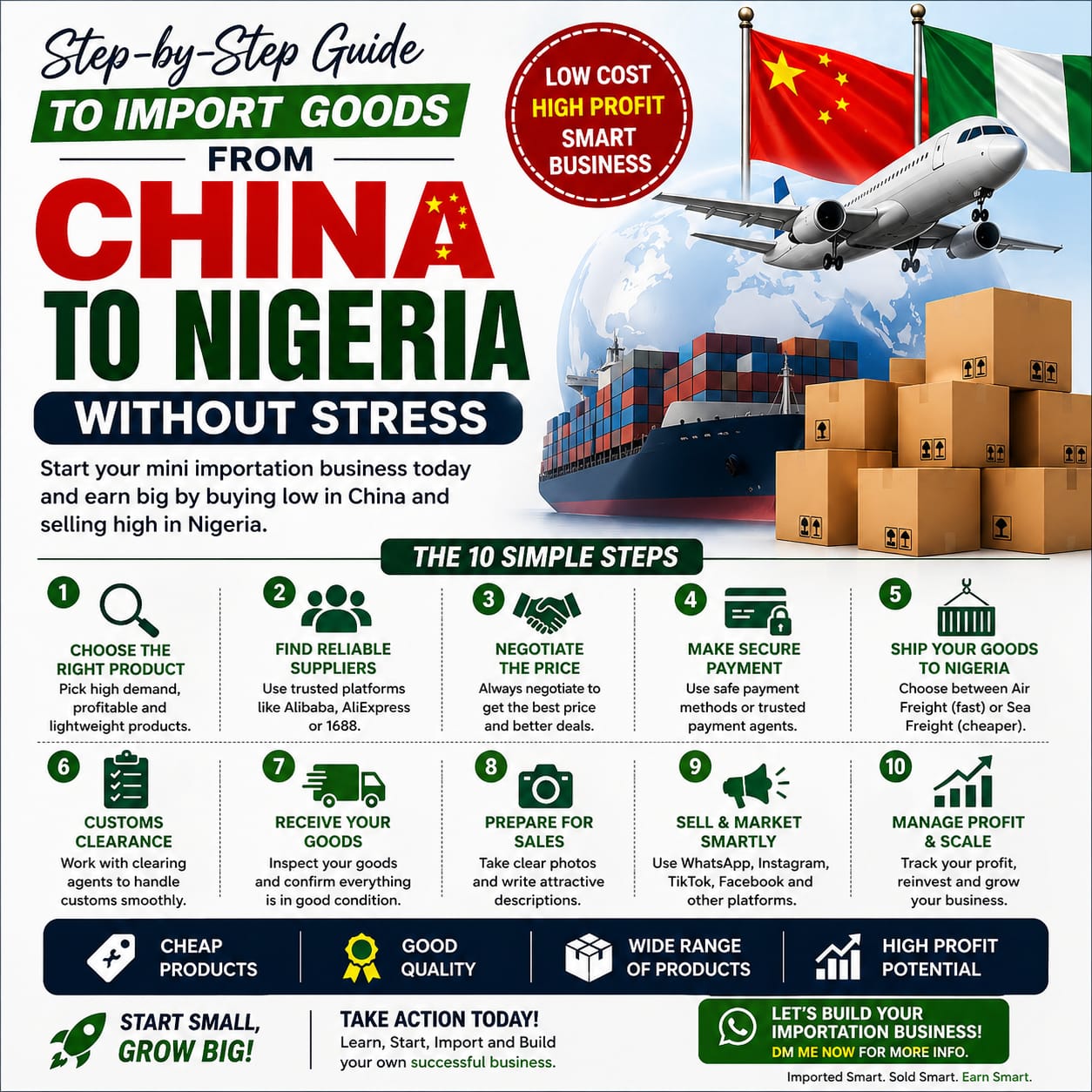
Guide to Import from China to Nigeria Without Stress
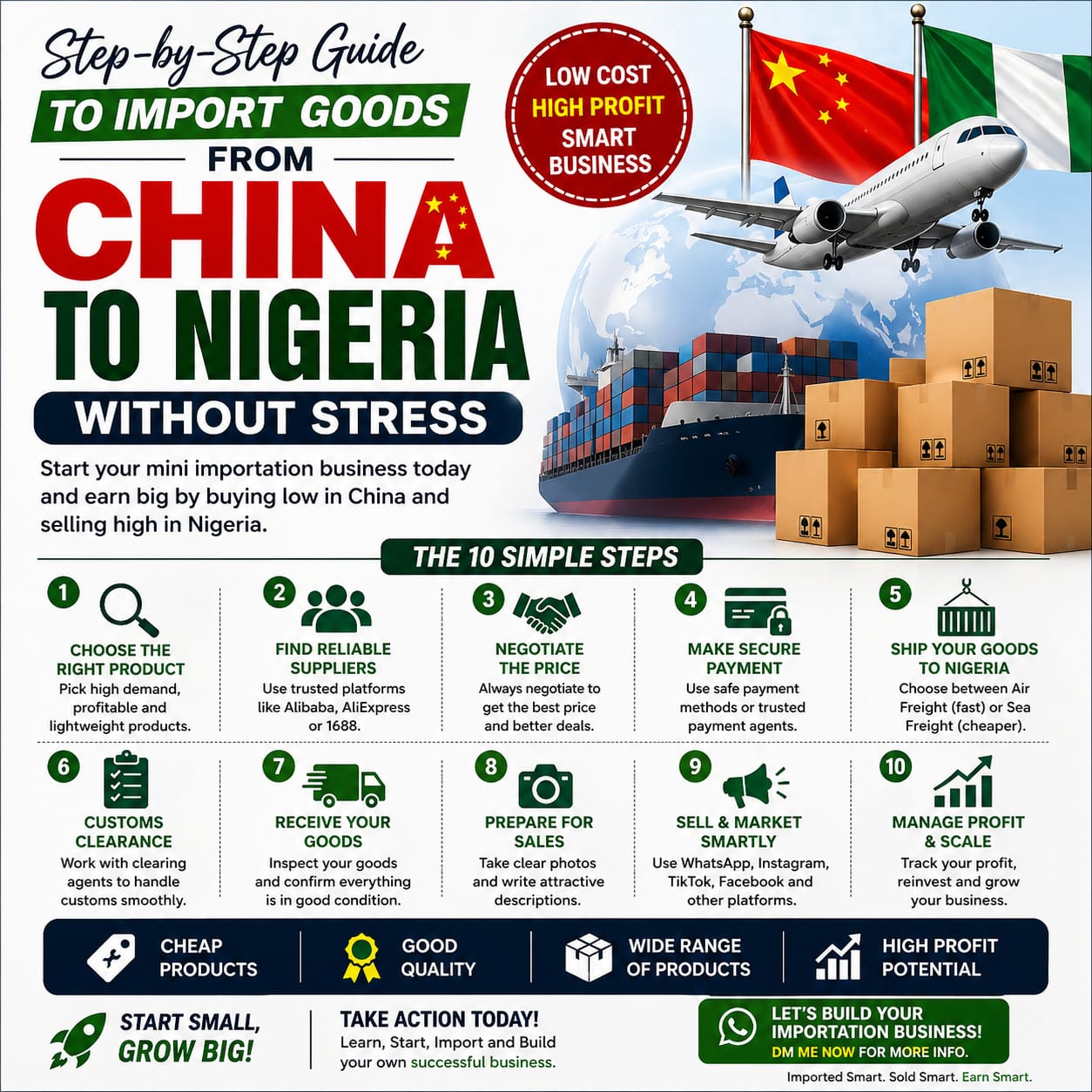
Introduction
Starting a mini importation business from China to Nigeria has become one of the most practical ways for young entrepreneurs and small business owners to earn income online. With the rise of e-commerce, social media selling, and affordable global logistics, anyone can now start importing goods even with small capital. However, while many people hear about it, only a few actually understand the full process clearly
.The truth is that importing goods from China is not difficult. What makes it look hard is lack of proper guidance, fear of losing money, and misunderstanding how sourcing, shipping, and payments actually work. Once you understand the system step by step, it becomes a repeatable business model
.In this guide, you will learn everything you need to start importing from China to Nigeria without stress, even as a complete beginner. This is not theory—it is a simplified breakdown of how real importers operate daily.
Understanding the Importation Business First Before jumping into buying products, you need to understand what mini importation actually means. Mini importation is simply the process of buying low-cost goods from countries like China and reselling them in Nigeria for profit. The goal is to take advantage of cheaper manufacturing costs in China and the high demand market in Nigeria
.Many people think importation is only for big companies, but that is no longer true. Today, individuals can import small quantities of products and sell directly through WhatsApp, Instagram, TikTok, or physical markets. This is what makes it a “mini” importation business. The most important thing to understand is that importation is not just buying products—it is a full system involving product research, supplier selection, negotiation, payment, shipping, customs clearance, and selling. If you understand all these stages, you will avoid unnecessary losses.
Step One: Choosing the Right Product to Import
The first and most important step in importing goods from China is product selection. This is where most beginners either succeed or fail. If you choose the wrong product, you will struggle to sell, even if everything else goes well.
The best products for beginners are usually small, lightweight, and high-demand items. Examples include phone accessories, wristwatches, fashion items, beauty tools, kitchen gadgets, and simple electronics. These products are popular in Nigeria because they are affordable and solve everyday needs.
You should also pay attention to trends. In Nigeria, trends change fast, especially on TikTok and Instagram. A product that is trending today may sell for months if you act quickly. That is why successful importers constantly research what people are buying.A good method is to check online stores, social media ads, and even physical markets. If you see the same type of product being sold repeatedly, that is a sign of demand. Demand is more important than passion in importation business.
Step Two: Finding Reliable Suppliers in China
After choosing your product, the next step is finding a supplier. This is a very sensitive stage because your supplier determines product quality, pricing, and delivery reliability Most importers use platforms like Alibaba, AliExpress, or 1688. These websites connect you directly with manufacturers and wholesalers in China. Alibaba is more business-focused, while AliExpress is easier for beginners because it allows small orders. When selecting a supplier, you must be careful.
Do not just pick the cheapest option. Look at ratings, reviews, number of completed orders, and how long the supplier has been active. A reliable supplier will always have a track record of successful transactions. Another important tip is communication.
A serious supplier responds clearly, answers questions properly, and provides product details without hesitation. If a supplier is slow or unclear in communication, it is better to avoid them.
Always remember: in importation, trust is built through verification, not emotion.
Step Three: Negotiating Prices Like a Professional
Once you find a supplier, the next step is negotiation. Many beginners don’t know that prices in China are often flexible, especially for bulk orders.
You should always try to negotiate. Even a small reduction per unit can increase your profit margin significantly when you multiply it across dozens or hundreds of items. Suppliers expect negotiation, so do not feel shy.
You can also ask for better deals if you plan to order again in the future. Many suppliers reduce prices for long-term buyers because they value repeat customers.
However, do not push too hard. If you try to force unrealistic discounts, you may lose a good supplier. The goal is to build a working relationship, not just chase the cheapest price.
Step Four: Understanding Payment Methods
Payment is one of the most sensitive parts of importing goods from China to Nigeria. This is where many beginners feel afraid, but once you understand it, it becomes straight forward. Most Chinese suppliers accept payments through bank transfer, Alibaba Trade Assurance, or third-party agents. Because of currency limitations in Nigeria, many importers rely on agents or fintech services that help convert Naira to Dollars or Yuan. Before making payment, always confirm the supplier’s details carefully. Check invoice, account name, and order summary. Never send money without proper documentation. A smart strategy is to start with small orders first. This reduces risk and helps you test supplier reliability before scaling up.
Step Five: Shipping Goods from China to Nigeria
Shipping is another major part of importation. This is how your goods physically move from China to Nigeria.
There are two main shipping methods: air freight and sea freight. Air freight is faster but more expensive. It is best for small and urgent products. Sea freight is slower but cheaper, making it ideal for bulk goods.
As a beginner, you should consider starting with air freight because it helps you test products quickly. Once you understand the market and know what sells, you can switch to sea freight to reduce costs.
You will usually work with a shipping agent who handles transportation from China to Nigeria. The agent consolidates your goods, handles documentation, and ensures delivery to your location or warehouse.
Step Six: Customs Clearance in Nigeria After your goods arrive in Nigeria,
they must pass through customs clearance. This is the process where government authorities inspect imported goods before releasing them. If your documentation is correct, this process is usually smooth. However, delays can happen due to inspection, holidays, or incomplete paperwork.
To avoid stress, always work with experienced clearing agents. They understand customs procedures and can help you avoid unnecessary delays or extra charges. Never attempt to bypass customs rules. It may seem like a shortcut, but it often leads to bigger problems such as confiscation or fines .
Step Seven: Receiving and Preparing Your Goods for Sale
Once your goods clear customs, they are delivered to you. This is the moment your business becomes real because you now have physical products in hand. At this stage, you should inspect your goods carefully to ensure everything is correct and in good condition. If there are issues, you should report them immediately depending on your agreement with the supplier or agent .After inspection, the next step is preparing for sales. Take clear product photos, create simple descriptions, and decide your selling price based on total cost and profit margin
.Step Eight: Selling Your Imported Products in Nigeria
Selling is where your profit comes in. In Nigeria today, social media is the strongest selling tool. Platforms like WhatsApp, Instagram, Facebook Marketplace, and TikTok allow you to reach customers without needing a physical shop. You should focus on visibility. Post consistently, use attractive captions, and show product benefits clearly. People buy when they understand how a product solves their problem. You can also use small ads to boost visibility once you start making some profit. However, even without ads, consistent posting can generate sales if your product is in demand.
Step Nine: Managing Profit and Expenses Properly
One major mistake beginners make is poor financial calculation. Before selling any product, you must calculate total cost: product cost, shipping fee, customs charges, and delivery expenses. After calculating, add your profit margin. A good margin in mini importation is between 30% and 150%, depending on the product type. If you do not calculate properly, you may end up selling at a loss without realizing it. That is why record-keeping is very important in this business.
Step Ten: Avoiding Common Mistakes
Many beginners fail not because importation is hard, but because they make avoidable mistakes. Some of these include buying without research, trusting random suppliers, ignoring shipping costs, and over-investing in one product.Another major mistake is impatience. Importation is not a “quick money” scheme. It is a real business that grows with experience and consistency.Start small, test products, learn from mistakes, and improve gradually. This is how successful importers build long-term income.ConclusionImporting goods from China to Nigeria is a powerful business opportunity if done correctly. It allows you to access cheap products, build an online business, and grow income from small capital.However, success depends on understanding the process step by step—from product selection to supplier sourcing, payment, shipping, customs clearance, and sales. Once you master these stages, you can scale from small orders to a full importation business.The key is not rushing but learning the system properly and applying it consistently. Over time, what starts as a small mini importation hustle can grow into a strong and stable business.