


Simple Pricing Strategies That Make Market Sellers More Profit in Nigeria
In Nigeria’s fast-moving and highly competitive market environment, pricing is one of the most powerful tools any seller can use to increase profit. Whether you sell foodstuff in a local market, run a small provision shop, sell fashion items, or operate an online store that serves physical customers, your pricing strategy can either grow your business or quietly destroy it.
Many market sellers focus only on buying and selling without thinking deeply about how pricing affects profit margin, customer behavior, and long-term growth. The truth is that selling cheap does not always mean selling more, and selling expensive does not always mean losing customers. What matters most is how your prices are structured.
This guide explains simple but powerful pricing strategies Nigerian market sellers can use to increase profit without needing complex tools or business knowledge. These are practical methods that work in real market conditions.
Understanding Pricing in the Nigerian Market
Pricing in Nigeria is highly sensitive because customers are very aware of changes in cost due to economic pressure. Many buyers compare prices quickly and often choose the cheapest option available. This means sellers must be very intentional about how they set prices.
At the same time, sellers also face rising costs from suppliers, transportation, and inflation. This creates a situation where pricing must be carefully balanced between affordability and profitability.
In many markets, even a small difference in price can determine whether a customer buys from you or moves to another seller. Because of this, pricing should never be random or based on guesswork.
Cost-Plus Pricing Method
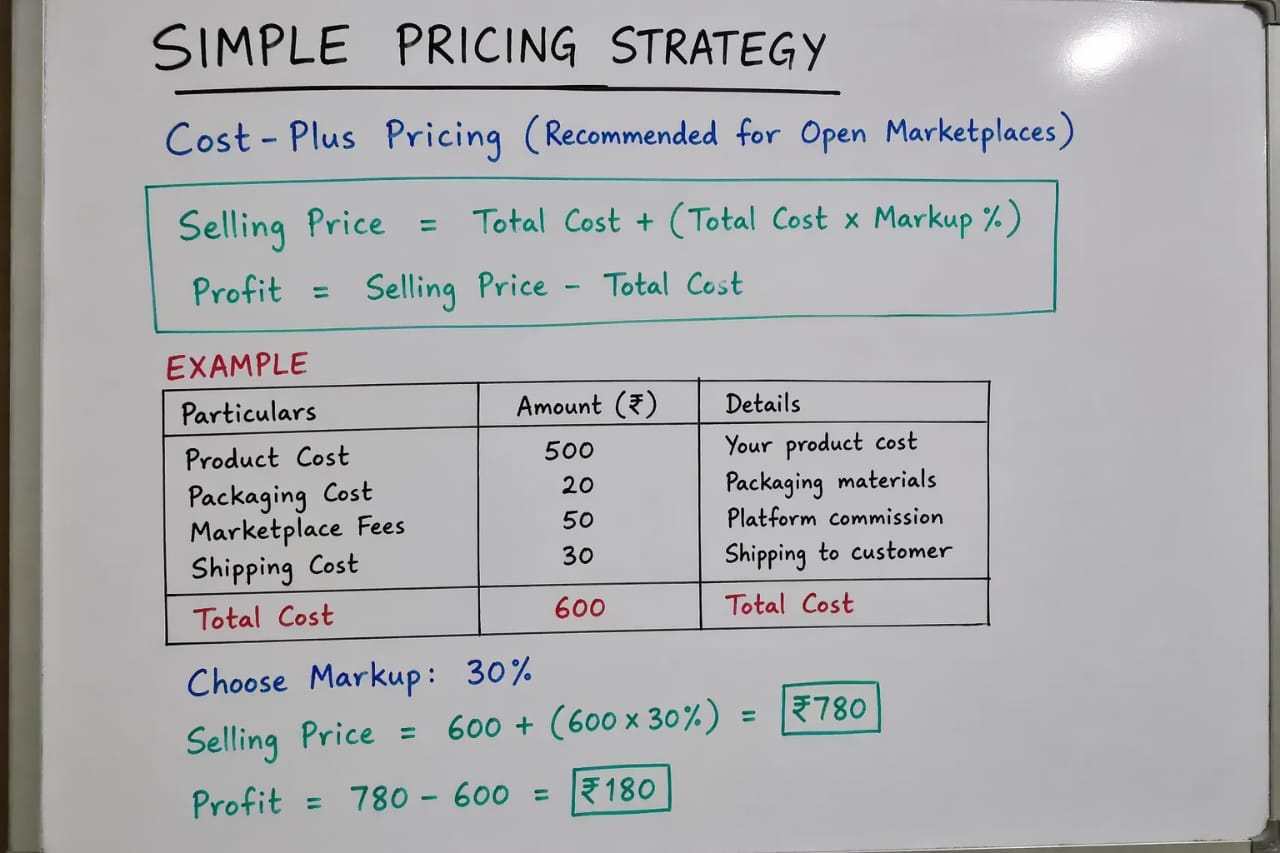
One of the simplest and most reliable ways to set prices is by calculating your cost and adding a fixed profit margin. This means you first determine exactly how much it costs you to buy a product, then add your desired profit before selling.
For example, if you buy an item for ₦2,000 and add ₦500 profit, your selling price becomes ₦2,500. This ensures that every sale contributes to your business growth.
Many sellers in Nigeria fail because they do not properly calculate their costs. Instead, they guess prices or copy competitors without understanding their own expenses. This often leads to selling at a loss or making very little profit.
Using this method helps you stay consistent, understand your business better, and avoid unnecessary losses.
Psychological Pricing
Psychological pricing is based on how customers perceive numbers rather than the actual value difference. Small changes in pricing can make a product appear cheaper or more attractive.
For example, pricing an item at ₦9,950 instead of ₦10,000 makes it feel significantly cheaper, even though the difference is small. Many customers react emotionally to prices instead of analyzing them logically.
This method works very well in Nigerian markets where buyers are highly sensitive to price changes. Even a small adjustment can influence buying decisions and increase sales.
It is a simple but powerful way to attract more customers without reducing your profit significantly.
Bundle Pricing
Bundle pricing involves combining multiple products and selling them together at a slightly lower price than if they were bought separately.
For example, instead of selling items individually, you can group them into a package deal that offers better value for money.
This approach encourages customers to buy more at once, which increases total sales. It also helps you move stock faster, especially items that are not selling quickly.
In Nigeria, customers love deals that feel like savings, so bundle pricing is very effective for food items, household goods, and fashion products.
Tiered Pricing
Tiered pricing means offering the same product in different sizes, qualities, or versions at different prices. This gives customers the freedom to choose based on their budget.
For example, you can offer small, medium, and large versions of a product or provide basic and premium options.
This strategy is very effective in Nigeria because customers come from different income levels. Instead of losing a customer who cannot afford your higher price, you offer them a cheaper alternative.
It helps you serve a wider audience while still maintaining profitability.
Anchor Pricing
Anchor pricing works by showing a higher reference price before your actual selling price. This makes your real price look like a discount or special offer.
For example, telling a customer that a product normally sells for ₦15,000 but you are offering it for ₦10,000 creates a strong perception of value.
Customers tend to focus on the higher price first, which makes your actual price feel more affordable and attractive.
This strategy is commonly used in competitive markets where sellers need to convince customers quickly.
Seasonal Pricing Strategy
Prices naturally change depending on the season, demand, and availability of products. In Nigeria, this is very common during festive periods, harvest seasons, and times of scarcity.
During high-demand periods like Christmas or New Year, prices often increase due to higher demand and limited supply. Similarly, transportation costs and weather conditions can affect pricing.
Smart sellers adjust their prices slightly based on these changes to maintain profit while staying competitive.
However, it is important to avoid excessive price increases that may push customers away.
Volume Discount Strategy
Volume discounting encourages customers to buy more by offering a lower price per unit when they purchase in larger quantities.
For example, buying one item may cost more per unit than buying five items together at a discounted rate.
This strategy increases sales volume and helps sellers move stock faster. It also encourages customers to spend more at once, improving cash flow.
In Nigerian markets, many customers prefer buying in bulk when they feel they are saving money.
Competitive Pricing
Competitive pricing involves monitoring what other sellers are charging and adjusting your prices accordingly.
If your price is too high without added value, customers will likely go elsewhere. If it is too low, you may reduce your profit unnecessarily.
The goal is to position your price based on your quality, location, and customer demand.
In markets where many sellers offer similar products, staying aware of competition is essential for survival.
Value-Based Pricing
Value-based pricing focuses on what customers believe your product is worth rather than just the cost of production.
If your product is well packaged, clean, or comes with better service, customers are often willing to pay more for it.
This approach helps you move away from competing only on price and instead focus on quality and experience.
In Nigeria, trust and presentation can significantly increase how much customers are willing to pay.
Small Increment Pricing Strategy
Instead of increasing prices suddenly, this method involves making small gradual changes over time.
For example, adding a small amount like ₦50 or ₦100 occasionally helps you increase profit without shocking customers.
This allows buyers to adjust slowly and continue trusting your pricing.
It is a safe and effective way to improve profit margins without losing customers.
Common Pricing Mistakes Market Sellers Make
Many sellers struggle not because they do not sell, but because they set prices incorrectly.
Some common mistakes include failing to calculate costs properly, copying competitors without understanding their own expenses, and not adjusting prices when costs increase.
Others also give unnecessary discounts or mix business money with personal funds, which makes it hard to track profit.
Avoiding these mistakes alone can significantly improve business performance.
How to Choose the Right Pricing Strategy
There is no single pricing method that works for all businesses. The best approach is to combine different strategies based on your product and market situation.
For example, food sellers may combine bundle pricing with volume discounts, while fashion sellers may use tiered pricing and value-based pricing.
Flexibility is important because market conditions in Nigeria change frequently.
Conclusion
Pricing is one of the most important factors that determine success in business. It affects how fast you sell, how much profit you make, and how customers perceive your brand.
In Nigeria’s competitive market, sellers who understand pricing strategies always perform better than those who rely on guesswork.
By applying simple strategies like cost-plus pricing, psychological pricing, bundle deals, and value-based pricing, any market seller can increase profit and grow steadily.
Success in business is not just about what you sell, but how smartly you price it.