

How Smart Sellers Make More Profit Without Lowering Prices
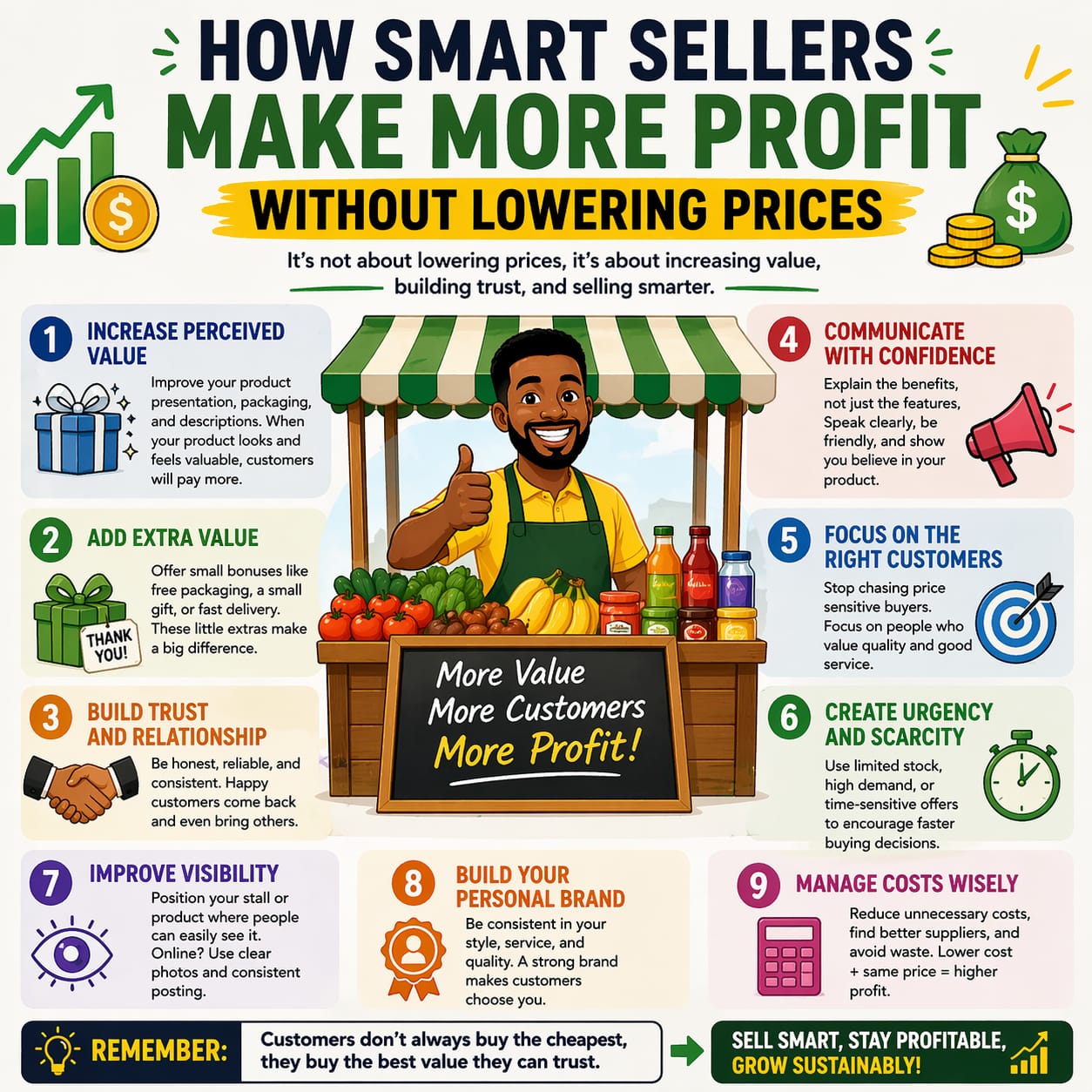
Smart sellers understand something many others ignore: profit is not controlled only by price. In open marketplaces, whether offline or online, the difference between a struggling seller and a successful one often comes down to strategy, not discounts. While many sellers rush to reduce prices whenever sales slow down, smart sellers take a different path. They focus on increasing value, improving perception, and building trust — all of which allow them to maintain or even raise their prices while still attracting buyers.
One of the biggest mistakes sellers make is assuming that customers always want the cheapest option. This is not entirely true. Customers want value. If a product looks cheap, feels cheap, and is presented poorly, even a low price may not convince them to buy. On the other hand, if a product looks valuable, is presented well, and comes from a confident seller, customers are often willing to pay more without hesitation. This is why reducing price is not always the solution; improving value is.
Perceived value plays a major role in how buyers make decisions. Two sellers can offer the exact same product, yet one sells faster and at a higher price simply because of how the product is presented. Smart sellers pay attention to details like packaging, arrangement, and description. They understand that presentation creates perception, and perception influences buying decisions. A neatly displayed product with a clear and confident description naturally appears more valuable than a poorly arranged one.
Another important factor is communication. The way a seller speaks can either attract or push away customers. Smart sellers communicate with confidence and clarity. They don’t just mention what the product is; they explain what the product does and why it is worth buying. Instead of saying “This is just a normal item,” they highlight durability, usefulness, and benefits. This kind of communication builds trust and makes buyers more comfortable paying the asking price.
In addition to communication, smart sellers focus on adding value rather than removing price. Instead of offering discounts that cut into profit, they provide small extras that make the deal feel better for the customer. This could be something as simple as better packaging, a small bonus item, or friendly after-sales support. These additions often cost little but create a stronger impression, making customers feel they are getting more for their money.
Trust is another key element that allows sellers to maintain their prices. Customers are more likely to buy from someone they trust, even if the price is slightly higher. Smart sellers build this trust over time by being honest, consistent, and reliable. They avoid exaggeration and ensure that what they promise matches what they deliver. As trust grows, customers become less sensitive to price and more focused on the relationship and reliability of the seller.
Targeting the right customers also plays a major role in profitability. Not every customer is worth chasing. Some buyers will always look for the cheapest option, no matter what you offer. Smart sellers understand this and choose to focus on customers who value quality, convenience, and good service. By attracting the right audience, they reduce the pressure to compete on price and instead compete on value.
Another strategy smart sellers use is creating a sense of urgency. When customers feel that a product might run out or that an opportunity might be missed, they are more likely to make quick decisions. This does not require manipulation; simple and honest statements like limited availability or high demand can encourage faster purchases. This approach helps maintain price while increasing sales speed.
Visibility is equally important. In a crowded marketplace, being seen is half the battle. Smart sellers position themselves where customers can easily notice them. In physical markets, this might mean choosing a busy location or arranging products in a way that attracts attention. Online, it involves using clear images, consistent posting, and engaging descriptions. The more visible a product is, the higher the chances of selling it without needing to reduce the price.
Branding is another powerful tool that many small sellers overlook. A strong personal brand makes customers remember you and prefer you over others. Smart sellers build their brand through consistency, good service, and a unique selling style. Over time, customers begin to associate them with quality and reliability, which allows them to charge confidently without fear of losing buyers.
Smart sellers also focus on selling solutions rather than just products. Customers are not simply buying an item; they are buying what that item does for them. When a seller shifts their focus from the product itself to the benefit it provides, the value becomes clearer. For example, instead of selling clothes as ordinary items, they present them as a way to look good and feel confident. This shift in perspective makes price less of a concern.
Knowledge is another advantage that smart sellers use to their benefit. When a seller understands their product deeply, they can answer questions confidently and handle objections effectively. This level of understanding reassures customers and strengthens their willingness to pay the stated price. A knowledgeable seller appears more professional and trustworthy, which adds to the overall perceived value.
Social proof also plays an important role in influencing buyers. When customers see that others are buying a product, they feel more comfortable doing the same. Smart sellers highlight popular items or mention when a product is in high demand. This creates a sense of reliability and reduces hesitation, allowing the seller to maintain their pricing.
Consistency in quality is something smart sellers never compromise. While some sellers try to cut costs by reducing quality, this often backfires in the long run. Customers who feel disappointed rarely return. Smart sellers maintain their standards, ensuring that every customer receives the value they expect. This consistency builds a strong reputation, which supports higher pricing over time.
Managing costs effectively is another way smart sellers increase profit without touching their prices. Instead of reducing selling price, they focus on reducing unnecessary expenses. This might involve finding better suppliers, minimizing waste, or improving efficiency. Lower costs combined with stable prices naturally lead to higher profit margins.
Finally, smart sellers think long-term. They understand that building a profitable business is not about quick wins but about sustainable growth. Instead of reacting emotionally to slow sales by cutting prices, they analyze the situation, improve their strategy, and stay consistent. Over time, this disciplined approach leads to stronger customer relationships, better reputation, and increased profitability.
In conclusion, making more profit without lowering prices is not only possible but practical. It requires a shift in mindset from price competition to value creation. Smart sellers focus on presentation, communication, trust, and strategy rather than discounts. By doing so, they not only protect their profits but also build a business that can grow and last.